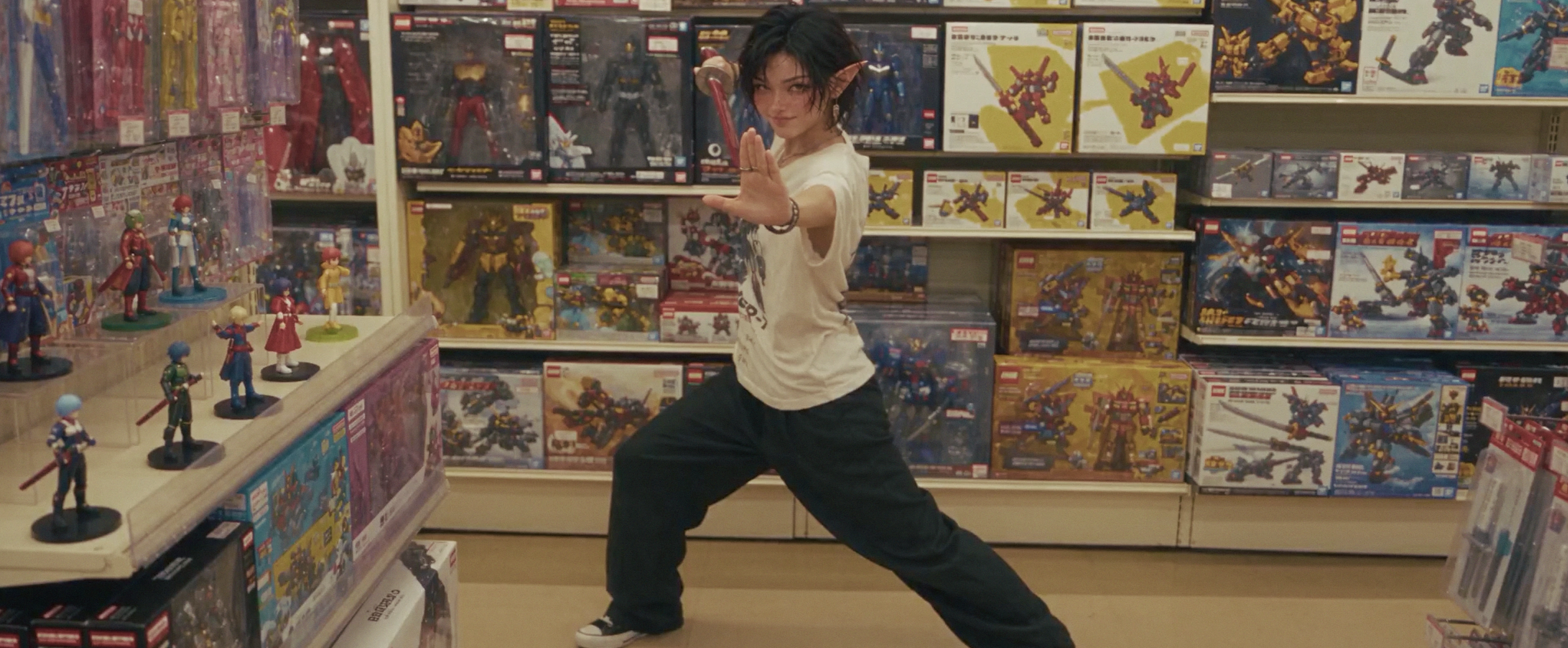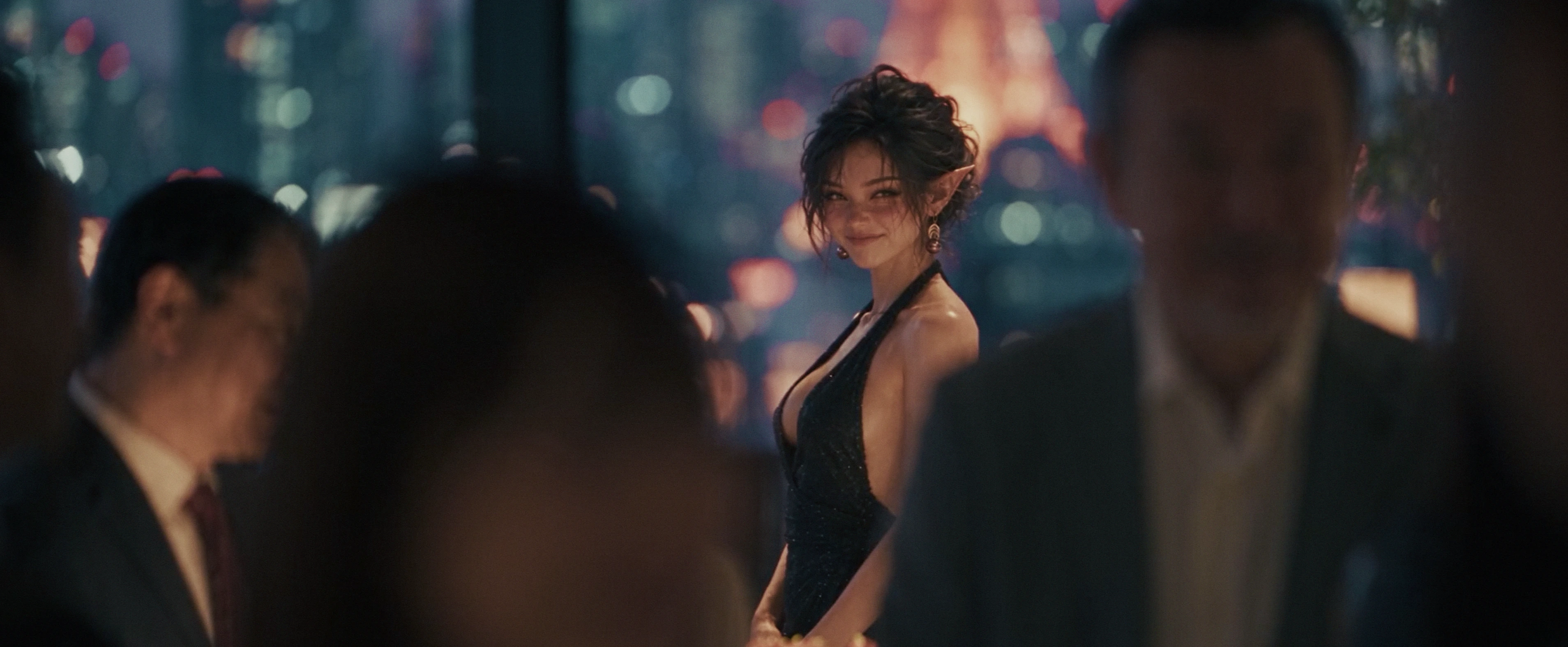
A 28-minute fictional documentary written and directed by Rob McLellan, whose previous work includes the science-fiction short ABE and years working in virtual production.
Rob: It's essentially a fictional documentary about a young Elven woman called Sera who spends a week travelling around Japan with a documentary filmmaker.
Sera comes from a civilisation that's extraordinarily advanced, peaceful and harmonious. But she's also young, restless, impulsive and slightly bored with the world she comes from.
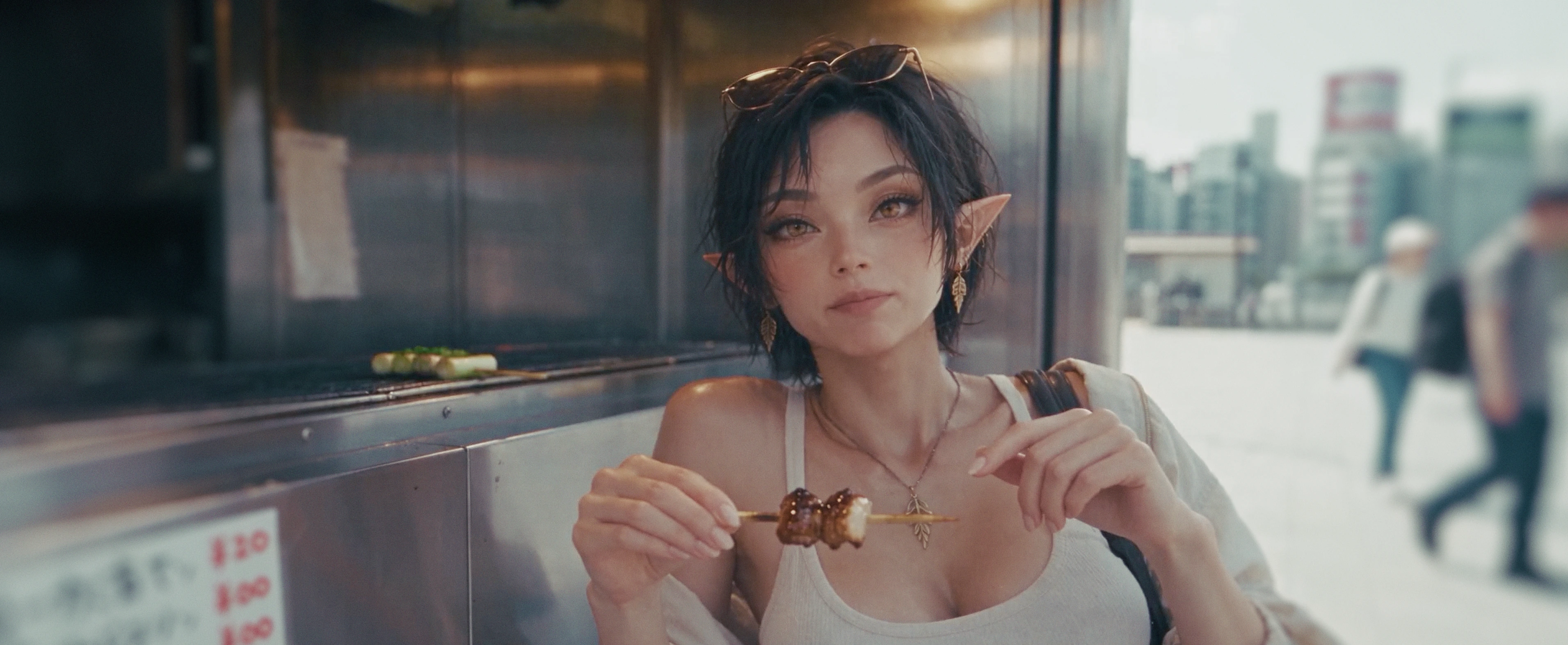
What interested me wasn't the fantasy element so much as the contrast between her extraordinary existence and the very ordinary things she experiences. Eating noodles, getting drunk, dancing, visiting the beach, making friends. Falling in love, perhaps.
Stylistically, I wanted it to feel like an actual documentary. The camera is frequently imperfect, the conversations are sometimes awkward, and quite a lot of the film is simply observing Sera being herself.
It's a fantasy film, but I wanted to make it feel as though somebody had genuinely met this person and spent a week filming her.
Rob: I've spent a large part of my career working on science fiction, visual effects and virtual production. My short film ABE opened a lot of doors in Hollywood, but it also meant I became associated with a particular kind of high-concept genre filmmaking.
I've always been more interested in characters than technology.
With Sera, I wanted to see whether I could use generative filmmaking to tell a story that was almost entirely dependent on character and performance.
There are no enormous battles or elaborate action sequences. Most of the film is two people talking, travelling and getting to know one another.
In some ways, that's a much harder challenge.
Rob: Sera herself. Without question.
She needed to feel like the same person throughout the entire film, and I don't just mean visually.
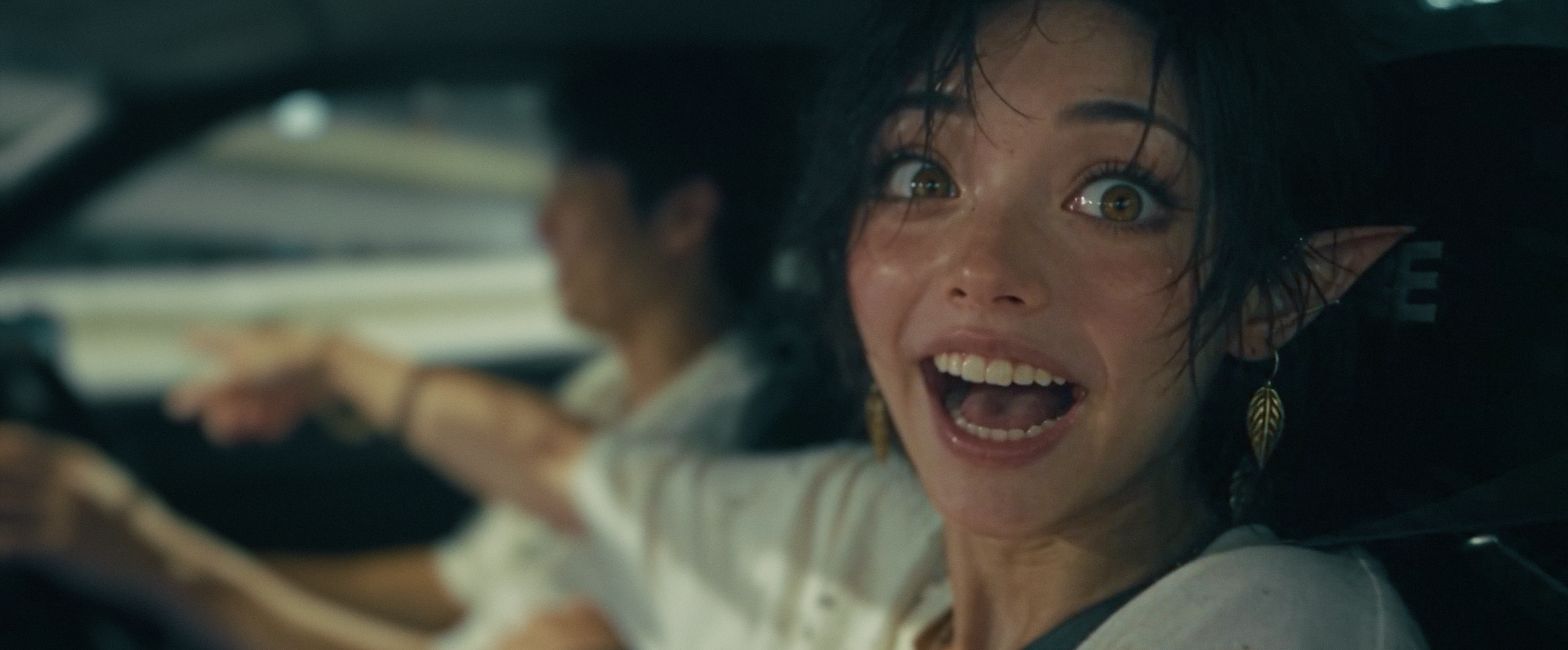
She has a particular personality, a sense of humour, a way of speaking and reacting to the world. She's curious, mischievous, occasionally infuriating, but also surprisingly vulnerable.
One of my favourite moments is right at the beginning. When we first see her, she appears quite aloof, almost intimidating. Then the filmmaker introduces himself and suddenly her personality comes bursting through.
That transition was really important to me.
If audiences see Sera as a collection of generated images, the film doesn't work. They have to forget how she was made and start caring about her.
Rob: Massively. I've spent years working in previs and virtual production, and the fundamental principles of filmmaking don't suddenly disappear because you're using generative tools.
You still need to understand lenses, blocking, composition, performance, pacing and editorial storytelling.
I approached Sera with a very specific visual language. Long lenses, shallow depth of field, natural light, foreground obstructions, imperfect handheld camera movements.
I wanted the camera to behave like a human operator. Somebody who's trying to keep the shot steady, anticipating what the subject might do next, occasionally getting it wrong.
That was actually quite important. AI video has a tendency to produce these beautiful, impossibly smooth camera movements, which were completely wrong for this film.
I wanted the audience to feel that there was a person behind the camera, reacting to another person in front of it.
Rob: One of the biggest challenges with generative filmmaking is that you're not simply making individual shots. You're making a film, and a film requires continuity.
Characters have to remain recognisable, environments have to make sense, and you need to be able to revisit decisions without everything falling apart.
Cascade gave me a production environment in which I could develop the visual material, work through variations and build sequences while keeping the broader project organised.
I still approached the work very much as a director. I'd establish what I wanted from a scene, develop the framing and performances, generate material, then evaluate it editorially.
Sometimes the first result was exactly what I wanted. Other times I'd spend a considerable amount of time refining something that might only last a few seconds on screen.
The important thing was being able to keep working towards a specific creative intention rather than accepting whatever the technology happened to produce.
Rob: Performance. Definitely performance.
It's relatively straightforward now to generate an impressive-looking image. What's much harder is creating the illusion of a spontaneous human moment.
Somebody listening rather than speaking. A little hesitation before answering a question. A smile that arrives slightly too late. Somebody becoming emotional and trying not to show it.
Those are the things that make a character believable.
Sera is quite animated and expressive, so there was also the challenge of making sure her personality remained consistent from one scene to another.
And because the film is presented as a documentary, the performances couldn't feel overly choreographed.
I wanted the sense that the camera had simply happened to capture something.
Rob: It changed the mechanics, certainly, but I don't think it fundamentally changed my approach to directing.
I've always enjoyed experimentation. In virtual production, I used to tell artists to break things until they made something interesting.
That philosophy translates surprisingly well to generative filmmaking.
You try something, discover that it doesn't work, change your approach, and sometimes stumble across something much better than you originally imagined.
But there's an important distinction between experimentation and surrendering creative control.
I'm not particularly interested in asking AI to make a film for me. I'm interested in using it to make the film I want to make.
Rob: How quickly I stopped thinking about the technology and started thinking about Sera as a character.
Once I'd established her personality and visual identity, the conversations became much more like ordinary directing conversations.
Would Sera actually say that? Would she react that way? Is she being too serious? Where's the mischief?
I found myself making decisions about her behaviour rather than worrying exclusively about the technical process.
That was quite an interesting moment, because it suggested that the tools were beginning to become transparent.
And I think that's ultimately what you want from filmmaking technology. You don't want the audience thinking about the camera or the rendering process. You want them thinking about the characters.
Rob: Absolutely essential.
I think there's a misconception that generative filmmaking is about writing a prompt and receiving a finished scene.
That's not remotely how I approached this.
The film was constructed editorially, with individual performances, reactions, transitions and moments selected for their contribution to the story.
A generated shot might contain only a few seconds of material that I actually wanted to use. Sometimes the most interesting moment was something that happened almost accidentally.
The edit is where those fragments become performances, and where those performances become relationships.
Sound was equally important. The sense of somebody being present behind the camera, the ambient noise of Tokyo, the pauses in conversation, the music: all of those elements help sell the documentary illusion.
Rob: Sera.
Not a particular shot or technical achievement. The character.
There are moments in the film where I genuinely feel like I'm watching a real person. Not because the image is technically perfect, but because something about her behaviour feels authentic.
And I think the film has an emotional journey that I haven't always been able to explore in my previous work.
I've made films built around big ideas before. This time I wanted to make something built around somebody you might actually miss when they're gone.
If people finish the film wishing they could spend another week with Sera, then I've achieved what I set out to do.
Rob: Learn filmmaking first.
That might sound slightly provocative, but I think it's important.
The technology is becoming increasingly capable of producing impressive images, and that's wonderful. But impressive images aren't necessarily good filmmaking.
You still need taste. You need to understand storytelling, performance, cinematography and editing. You need to know why you're making a particular creative decision.
The exciting thing about tools like Cascade is that they potentially allow filmmakers to attempt projects that would previously have been financially or logistically impossible.
But the technology doesn't give you something to say.
That's still your job.
Rob: More films, hopefully!
What's exciting to me is that I'm no longer restricted to a particular genre or production scale.
I can explore intimate character pieces like My Week With Sera, but also much larger science-fiction stories, action films and ideas that would traditionally require enormous production resources.
I'm particularly interested in seeing how far I can push longer-form storytelling and character continuity.
For me, the real opportunity isn't simply making films faster or cheaper.
It's being able to make films that might otherwise never exist.